Aspects of intelligent learning systems

e-Learning across various educational contexts

KES2026 Invited Session

Thank you!

Our invited session at KES2026 in Dún Laoghaire, Dublin was successful! We thank all authors, presenters, and reviewers. The research papers will be available in Procedia Computer Science (Elsevier ScienceDirect). See you next year!

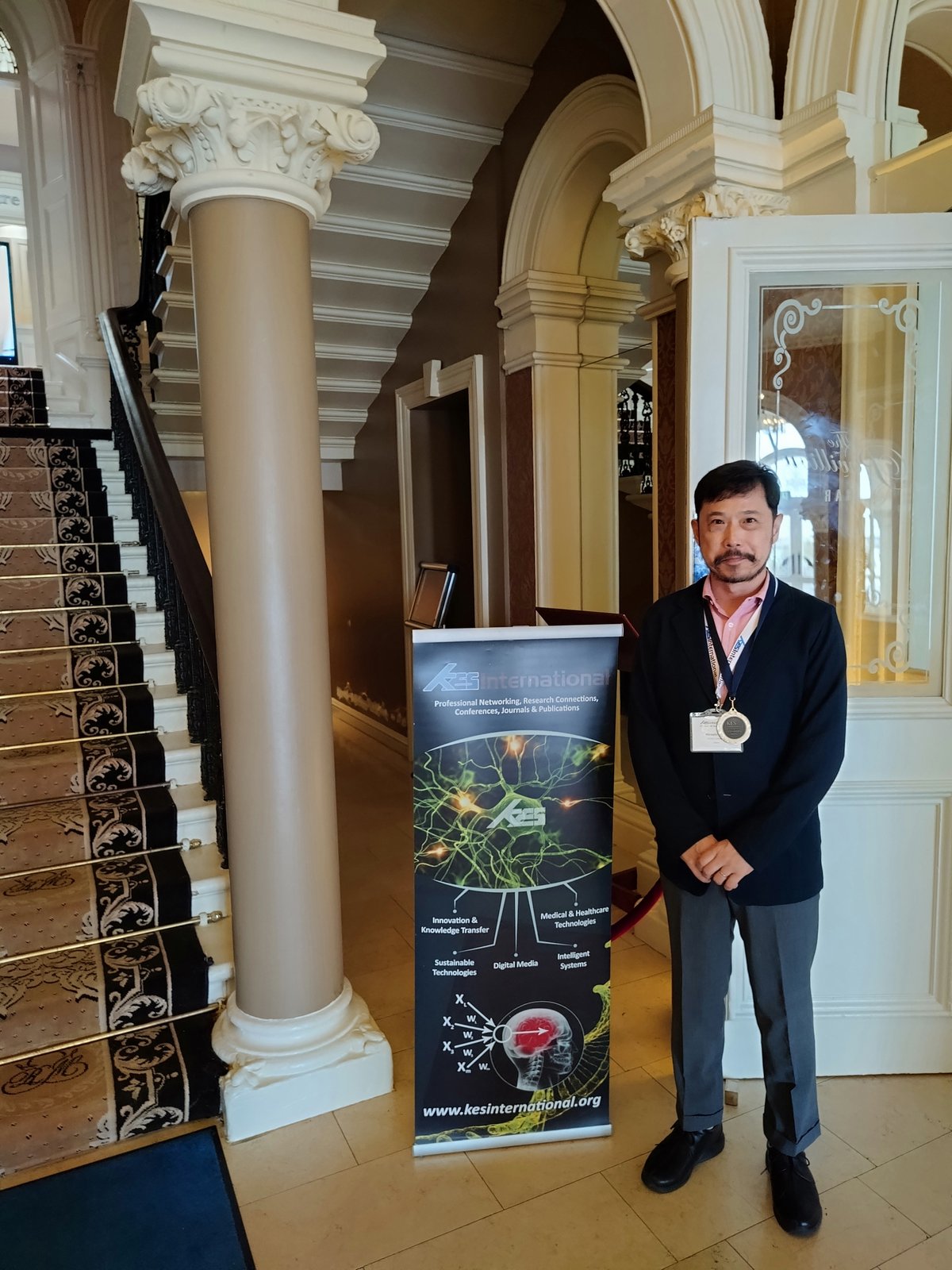
We are also delighted to report that the session chair, Prof. Dr. Hiroshi Ueda, was honoured with the KES Founder's Medal at KES2026.

  • Students' Perceptions and Challenges in Utilizing Artificial Intelligence and Large Language Models in Learning Outcomes, Emilia Loredana Pop, Ioan Sima and Daniela Maria Cristea
  • Behavioral and Temporal Indicators of AI-Assisted SQL Problem Solving in a Controlled Assessment Environment, Janka Pecuchová and Martin Drlík
  • Improving Automated Essay Scoring with Targeted LLM-Based Data Augmentation under Imbalanced Data, Duy Anh Le, Nghia Vo Thanh, Huy Trieu, Nam Van Chi, Huy Tien Nguyen and Tung Le
  • Impact of Generative AI as a Scaffolding Tool on Computational Thinking and Learner Engagement: A Multi-Institutional Study in General Software Education, Kyung-Sun Oh and Eun-Sill Jang
  • Influence of Prompting Strategies on the Performance of Lightweight LLMs in Automated Grading of Open-ended Questions, Lucia Benková, Ľubomír Benko and Janka Pecuchová
  • Using LLMs to Derive Textual Pedagogical Recommendations from Process Trees, Amira Abbes, Héla Fehri, Leila Ghorbel, Corinne Amel Zayani, Ronan Champagnat and Jacques Morcos
  • Remedial Action from Learning Analytics: A Systematic Review, Hans Georg Schaathun, Firuz Khafizov and Anita Jansone
  • Interactive Volume Rendering for Visualizing Hydrogen Atomic Orbitals, Hiroya Suno, Yuma Kawachi and Nobuaki Ohno
  • SQL-DQN: A Knowledge-Based Adaptive Learning Environment Integrating Deep Reinforcement Learning and Narrative Scaffolding for Personalized SQL Education, Hazra Imran and Jiahuan He
  • Development of a Dashboard using Vega for Real-time Monitoring in Practical Classes with Jupyter Notebooks, Nobukuni Hamamoto, Shigetoshi Yokoyama, Atsuko Takefusa and Kento Aida
  • Predicting Student Success in Higher Education Using AI-Driven Educational Data Mining on the OULAD Dataset, Ben Khalifa Ghada and Lilia Cheniti Belcadhi
  • PyQuiz: Toward an AI-Powered Serious Game for Programming Education, Khouloud Jouini and Kalthoum Rezgui
  • A Tutor-AI Assistant to Enhance Teachers’ Self-Efficacy for Inclusion: Tool Design & Preliminary Expert Content Validation, Martina Giorgi, Guido Benvenuto, Keith Johnston, Giulia Brandi and Andrea Chirico
  • Edunova: A Teacher-in-the-Loop Multi-Agent System for Pedagogy-Aware, Accessible, and Inclusive Lesson Design, Mohamed Semah Khlifi, Oussema Touir and Makram Soui
  • XPLAIN-ED: An XAI Framework for Educational Data with Quantitative and User-Centered Evaluation, Emmanuel Deniaux, Tesnim Khelifi, Nourhène Ben Rabah and Bénédicte Le Grand
  • Features of the Presence Effect Manifestation in Stress-Inducing Educational Virtual Reality Environments, Yulia Rogoleva, Ksenia Ryseva and Artem Kovalev
  • A Hybrid AI-Based Pedagogical Agent for Learner Profile Analysis and Adaptive Learning Strategy Selection, Asma Ayari, Mariem Chaabouni and Henda Ben Ghezala
  • IBIS-X: A Human-Centered Framework for End-to-End Dataset Selection, Machine Learning, and Explainable AI, Anthony Rodrigues, Nourhène Ben Rabah, Bénédicte Le Grand and Camille Salinesi

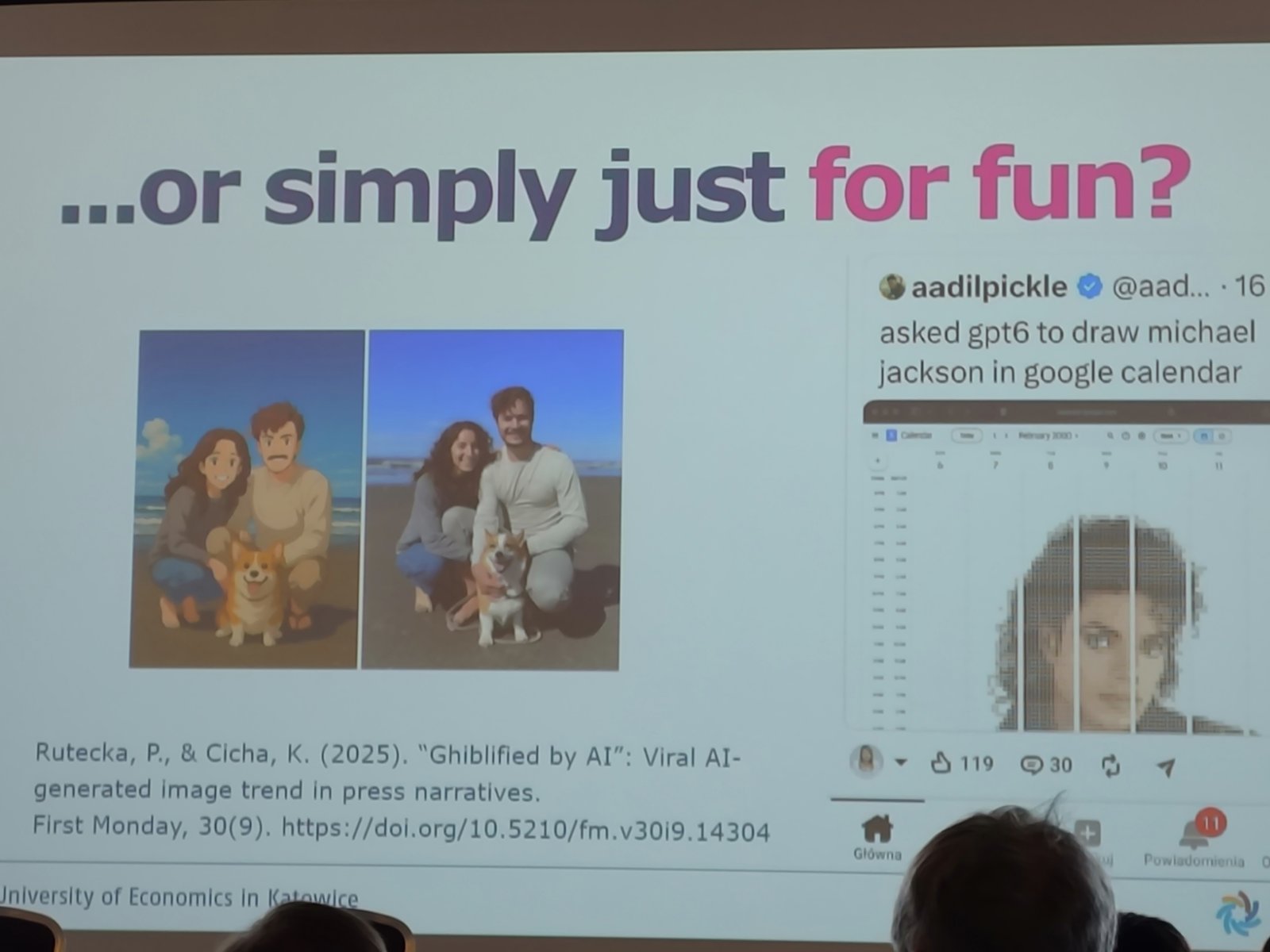
KES2026 session photo KES2026 session photo KES2026 session photo KES2026 session photo KES2026 session photo KES2026 session photo

Aim and Scope

With the rapid advancement of AI and digital technologies, intelligent and adaptive learning systems are increasingly being integrated into various educational contexts beyond traditional Learning Management Systems (LMS). These next-generation environments leverage artificial intelligence (AI) to personalize learning experiences, support educators, and enhance accessibility across time and distance.

This invited session aims to bring together researchers and practitioners to discuss innovative approaches, analytical frameworks, and applications of intelligent learning systems. We particularly welcome studies on how such systems capture, analyze, and utilize interaction data through cutting-edge analytical methods such as data mining, deep learning, and natural language processing (NLP) to improve learning processes and outcomes. The session also explores human-centered and affective aspects such as learner modeling, automatic feedback generation, ethical issues, and AI bias in education, contributing to the design of intelligent, trustworthy, and inclusive digital learning ecosystems. We invite contributions from researchers, educators, and practitioners working on intelligent, adaptive, and data-driven approaches to digital learning and educational innovation.

Topics of Interest

Specific topics of interest include but not limited to:

  • AI and Adaptive Learning Systems
    • Intelligent and adaptive learning systems
    • AI in education and educational data mining
    • Applications of Generative AI (e.g., ChatGPT, Midjourney) in education
    • Adaptive support for learning, learner modeling, diagnosis, and feedback
    • Modeling of motivation, metacognition, and affective aspects of learning
  • Technology-Enhanced and Evidence-Based Learning
    • Technology-enhanced learning and its theoretical foundations
    • Learning analytics and evidence-based education
    • Course management in online and virtual learning environments
    • Usage of Learning Management Systems (LMS) for teaching and learning practices
  • Applications and Case Studies
    • Practices in specific educational contexts (e.g., language learning, STEAM, disaster prevention) using ICT
    • Curriculum and instructional design
    • Gamification and gamified learning environments
    • Embodied learning for wellbeing in education
  • Ethics, Privacy, and Data Use
    • Use, security, ethics, and privacy of educational data
    • AI bias and fairness in learning systems
  • Emerging Technologies and Interfaces
    • Complex system architecture and intelligent interfaces
    • Recommendation systems for education
    • Adaptation of AR/VR/XR in reshaping education
    • Development of innovative educational tools

Important Date

  • Submission of papers: 15 April 2026
  • Notification of acceptance: 1 May 2026
  • Final paper submission 28 May 2026
  • Author registration deadline: Same as KES main conference
  • Contact

    Chair
    Prof. Dr. Hiroshi Ueda (Hosei University, Japan)
    Co-Chair
    Associate Prof. Dr. Mohammad Nehal Hasnine (Hosei University, Japan)
    Prof. Dr. Hiroya Suno (Hosei University, Japan)
    Associate Prof. Dr. Qian Wu (Hosei University, Japan)
    Associate Prof. Dr. Hisashi Hatakeyama (Institute of Science Tokyo, Japan)
    Main Contributing Research Centres
    Research Center for Computing and Multimedia Studies, Hosei University, Japan
    Email
    media-kesis2026@ml.hosei.ac.jp